Dog Aggression Training Kent With Safety-First Assessment
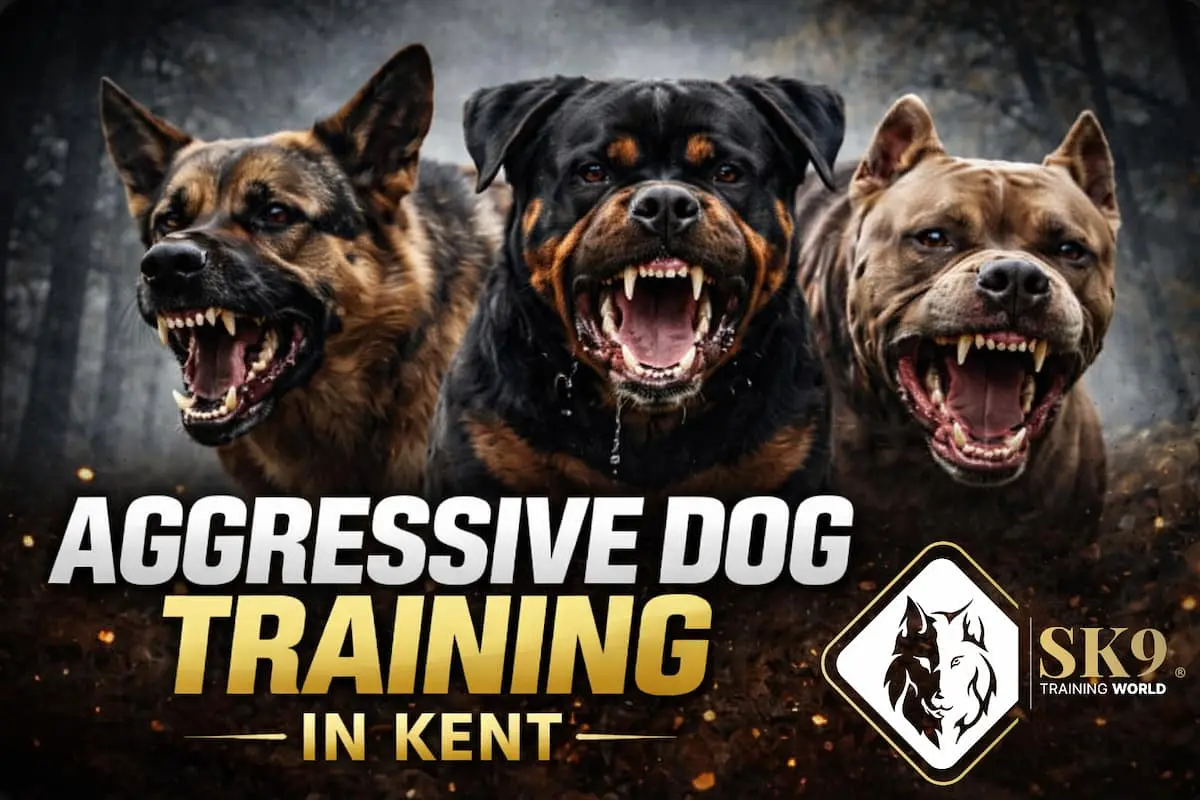
SK9 Training World provides aggressive dog training Kent support for owners dealing with biting, growling, lunging, guarding, food aggression, dog-to-dog conflict or human-directed escalation. The first step is always an aggression assessment, not generic obedience work.
Our dog aggression training Kent process reviews behaviour history, triggers, bite risk, handling patterns, household routines, equipment and management gaps before any rehabilitation work begins. This protects the dog, the owner, visitors and the public while giving the case a clear training route.
If you need an aggressive dog trainer in Kent, dog aggression help in Kent or a dog trainer for aggressive dogs in Kent, the safest route is assessment-led planning with clear rules, controlled progression and realistic owner handling standards. If the main issue is barking, lunging or over-arousal without a confirmed aggression risk, see our reactive dog training in Kent page.
Aggression Assessment Comes First
Every aggressive dog training programme starts with assessment. This is where we identify whether the behaviour is fear-based, territorial, resource-related, frustration-led, learned, defensive or linked to poor handling and repeated rehearsal.
- Behaviour history: previous incidents, escalation patterns and bite context
- Trigger mapping: dogs, people, movement, handling, territory, food, toys or space
- Risk screening: bite risk, household risk, public safety and management needs
- Handling review: lead pressure, owner timing, equipment, reactions and mistakes
- Environment review: home routines, thresholds, boundaries and exposure patterns
- Next-step plan: management rules, training route and suitability for progression
Client Feedback
Dog Training for Aggressive Dogs
Dog training for aggressive dogs is different from ordinary training. The goal is not to force the dog into situations it cannot handle. The goal is to reduce risk, stop rehearsal of unsafe behaviour and build safer responses through controlled, staged progression.
Where aggression is present, owner handling is just as important as the dog's behaviour. You will be coached on distance, timing, equipment, movement, safety rules and what to avoid. Without owner consistency, aggression rehabilitation will not hold.
Biting, snapping and bite-risk behaviour
Dog biting behaviour must be assessed carefully. We review bite history, context, escalation signs, predictability and the situations where risk is highest before recommending a plan.
Growling and warning behaviour
Dog growling behaviour is important information. It may indicate fear, discomfort, guarding, pressure or previous reinforcement history. Suppressing growling without addressing the cause can increase risk.
Dog lunging at dogs or people
Dog lunging at dogs or people may be frustration, fear, defensive behaviour or learned escalation. The assessment identifies the motivation before any structured exposure work begins.
Resource guarding and food aggression
Dog resource guarding and food aggression in dogs require immediate management rules before behaviour work starts. This may include changes to feeding routines, space, movement, handling, household access and owner response patterns.
How Aggressive Dog Behaviour Is Rehabilitated
Aggressive dog behaviour is improved through structure, management and behaviour change, not confrontation. Progress is criteria-based. Each stage must be safe and reliable before the next stage begins.
- Aggression assessment and risk screening
- Immediate management and safety rules
- Handling and equipment adjustments where needed
- Controlled exposure and behaviour modification exercises
- Owner coaching and real-world proofing
- Follow-up guidance and maintenance plan
Some dogs need private coaching with the owner present. Others may need a more structured environment for repetition and routine. If appropriate after assessment, we may recommend one-to-one dog training in Kent, residential dog training in Kent or dog obedience training as the delivery format.
Types of Aggression We Assess
- Dog-to-dog aggression and conflict escalation
- Human-directed aggression and handling sensitivity
- Dog biting behaviour and snapping incidents
- Dog growling behaviour and warning signals
- Dog lunging at dogs or people
- Dog resource guarding around food, toys, space or people
- Food aggression in dogs
- Territorial behaviour at doors, gates, gardens or vehicles
- Fear-based aggression and defensive escalation
Aggressive Dog Behaviourist or Aggression Trainer?
Owners often search for an aggressive dog behaviourist, dog aggression behaviourist or dog aggression trainer when they are unsure what type of help they need. The correct starting point is the same: a proper assessment that looks at behaviour, risk, environment, handling and safety.
If the issue is mainly aggression, this page is the right service. If the case is broader and includes anxiety, fear, household stress, reactivity and unclear triggers, a wider dog behaviourist assessment in Kent may be recommended.
Safety, Suitability and Owner Responsibility
Aggressive dog training is not suitable for every dog in the same format. Some dogs need behaviour assessment first, some need strict management before any progression, and some may need veterinary input where pain, health or medication may be relevant.
Where there is credible bite risk, owner compliance is mandatory. That includes distance rules, equipment rules, visitor rules, feeding rules, handling boundaries and avoiding uncontrolled introductions.
Aggressive Dog Training Pricing in Kent
The starting point is the aggression assessment. Ongoing rehabilitation is recommended only after we understand the risk level, trigger profile and programme scope. The assessment pricing follows the structure shown on our prices page.
- Aggression assessment weekdays: £30
- Aggression assessment weekends and bank holidays: £45
- Rehabilitation programme: recommended after assessment where suitable
Kent Coverage for Dog Aggression Training
Aggression assessments and rehabilitation programmes are delivered across Kent, covering postcode districts CT / ME / TN / DA. This includes Maidstone, Canterbury, Ashford, Sevenoaks, Dartford, Gravesend, Medway, Tunbridge Wells, Folkestone and surrounding areas, plus South East London for suitable cases.
Professional Standards
- Google Business Profile presence for SK9 Training World
- BIPDT certified training background
- Fully insured dog training service
SK9 Training World works with aggression cases using assessment-led screening, risk management, owner handling rules and staged behaviour change where suitable.
Aggressive Dog Training Kent FAQs
Answers to common questions about aggression assessments and dog training for aggressive dogs in Kent and South East London.
Do you offer aggressive dog training in Kent?
Yes. SK9 Training World provides assessment-led aggressive dog training across Kent and South East London. Every case starts with an aggression assessment to understand the behaviour, risk level, triggers and management rules before any rehabilitation work begins.
Can you help with biting, growling and lunging?
Yes, for suitable cases following assessment. We work with dogs showing biting risk, growling behaviour, lunging at dogs or people, guarding behaviour and unsafe escalation. Safety, management and owner handling rules come before any exposure work.
What does an aggression assessment include?
An aggression assessment includes behaviour history, trigger mapping, bite-risk screening, equipment and handling review, home routine review, environmental assessment and clear next-step recommendations for management and behaviour change where suitable.
How much does aggressive dog training cost in Kent?
The starting point is the assessment. Weekday aggression assessments are £30 and weekend or bank holiday assessments are £45. Any ongoing rehabilitation plan is recommended only after assessment, based on risk level, triggers and programme scope.
Do you work with resource guarding and food aggression?
Yes, suitable resource guarding and food aggression cases can be assessed. Management rules are applied first to reduce risk, then any behaviour work is staged carefully with clear owner handling standards.
Is aggressive dog training the same as reactive dog training?
No. Reactivity can involve barking, lunging or over-arousal without the same risk profile as aggression. Aggression work focuses more heavily on bite risk, safety planning, guarding, escalation and mandatory management rules. We will advise the right pathway after assessment.
Related Dog Aggression and Behaviour Services
Aggression cases are assessed first so the correct training route can be selected safely. These pages explain the closest related routes:
- Dog behaviourist in Kent for broader behaviour assessment, anxiety, fear, reactivity and unclear triggers.
- Reactive dog training in Kent for barking, lunging, scanning, pulling or trigger-based over-arousal.
- One-to-one dog training in Kent for private handling, lead walking, recall and owner coaching.
- Residential dog training in Kent for suitable dogs that need structured daily training and owner handover.
- Dog training prices in Kent for assessment and programme pricing.
- Dog training in Kent for the full Kent training overview.
Book an Aggression Assessment in Kent
The correct first step is an aggression assessment with risk screening, mandatory management rules and a clear recommendation for the safest training pathway.
Call 07535 804114, message us on WhatsApp, or use the online booking form. You can also review our wider dog training in Kent services before booking.