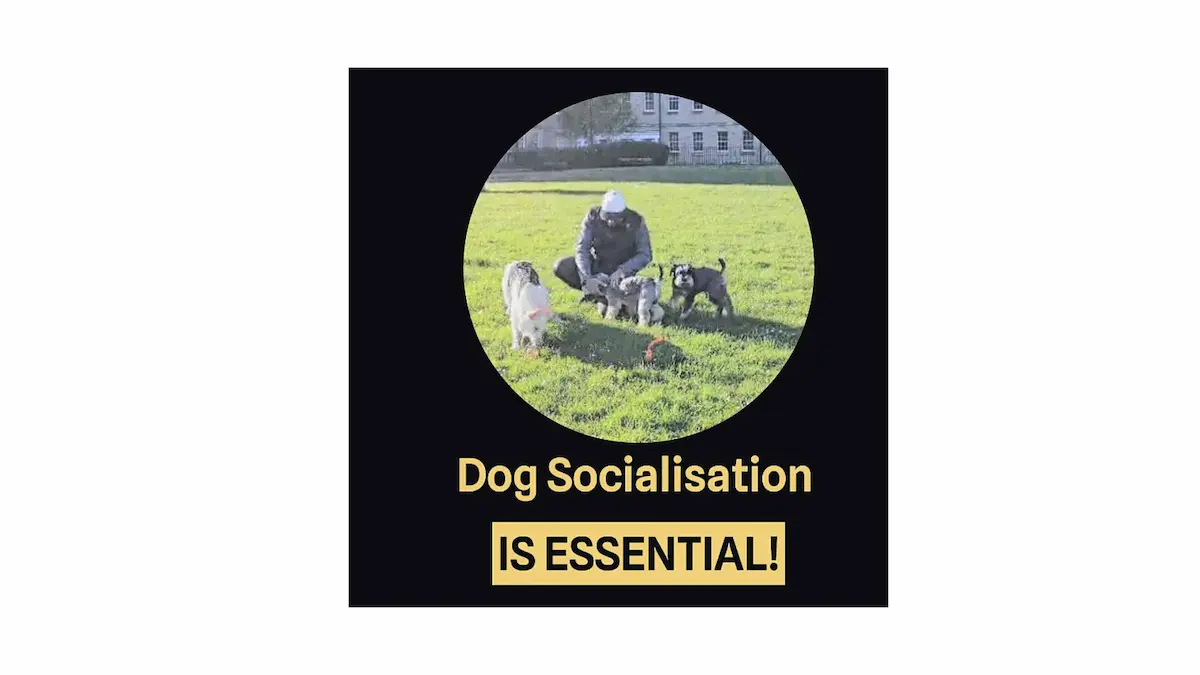
Puppy socialisation is not about making your puppy meet every person, dog or environment as quickly as possible. It is about creating short, positive experiences that help your puppy feel safe, curious and able to recover from something new.
The quality of each experience matters more than the number of experiences. Calm observation, appropriate distance and the freedom to move away are often more valuable than a busy greeting or a long outing.
When to Start Puppy Socialisation
Start introducing calm, positive experiences once your puppy is settled at home and in line with your veterinary advice about health and vaccination. Early socialisation does not require overwhelming situations. It can begin with ordinary sights, sounds, surfaces, handling and people your puppy can observe without pressure.
Keep every introduction brief. Give your puppy time to look, listen and decide whether they want to approach. A puppy that can stay relaxed, take food and return attention to you is usually coping better than one that is repeatedly pushed into contact.
What safe puppy socialisation involves
Safe socialisation means introducing new experiences gradually and making sensible choices about what, when and how much your puppy encounters. The aim is to help them build confidence without expecting them to cope with more than they are ready for.
- Start with familiar, low-pressure environments.
- Introduce one new element at a time where possible.
- Allow your puppy to watch from a comfortable distance.
- Reward calm behaviour and let your puppy move away when needed.
- Finish while your puppy is still coping well rather than waiting for them to become overwhelmed.
How to Introduce Safe, Positive Exposure
New experiences can include different people, sounds, household objects, vehicles, surfaces, handling and carefully chosen dogs. Introduce these in a way that lets your puppy stay relaxed and gives you time to observe their response.
For example, a first visit to a new place can be short and quiet. Your puppy may simply watch from the car, stand at a distance, or walk for a few minutes before going home. That still counts as useful exposure when it remains positive.
Introducing your puppy to people
Ask visitors to allow your puppy to approach at their own pace. Avoid encouraging people to lean over, crowd or repeatedly call the puppy towards them. Calm greetings are usually more useful than high-energy attention.
Introducing your puppy to other dogs
Your puppy does not need to greet every dog they see. Choose calm, appropriate dogs and keep the interaction short. Watching another dog from a distance can be a successful socialisation experience when your puppy remains comfortable.
Introducing sounds, movement and new places
Use distance and duration to control the experience. Begin far enough away that your puppy can notice the sound or movement without becoming distressed. Gradually reduce distance only when your puppy stays settled.
How to Read Your Puppy's Readiness
Your puppy's behaviour should guide the pace. A confident puppy may show relaxed movement, curiosity, normal eating and an ability to disengage from what they are watching. A puppy that is struggling may become very still, pull away, hide behind you, stop taking food or become unable to settle.
Those signs do not mean your puppy has failed. They mean the situation is currently too difficult. Create more space, reduce the intensity of the experience and allow time for your puppy to recover.
- Comfortable: relaxed body, natural movement, curiosity and the ability to respond to you.
- Unsure: pausing, turning away, staying close to you or watching from a distance.
- Overwhelmed: repeated attempts to escape, freezing, persistent barking, refusing food or difficulty settling.
Useful First Experiences to Prioritise
Every puppy is different, so choose experiences that are relevant to the life they will lead. Prioritise calm, everyday situations rather than trying to complete a long checklist in a short period.
- Gentle handling of paws, ears and collar area.
- Short car journeys and calm time in the vehicle.
- Different safe walking surfaces and household sounds.
- Quiet observation of people, traffic and other dogs.
- Brief, positive visits with trusted people.
- Learning to settle on a mat or beside you in a low-distraction place.
Where you need a structured plan for the early stages of your puppy's development, puppy training in Kent can provide practical support that is tailored to your puppy and the situations you need help with.
When to Pause or Make the Situation Easier
Pause when your puppy looks overwhelmed or cannot recover quickly. Do not wait for an experience to become frightening before changing the plan. Moving further away, shortening the session or returning to a more familiar environment can help keep the next experience positive.
It is also sensible to seek individual support when you are unsure how to manage a situation safely, when your puppy is becoming increasingly worried, or when everyday handling and exposure are consistently difficult.
Puppy Socialisation FAQs
When should I start puppy socialisation?
Start with calm, positive experiences as soon as your puppy is settled at home and in line with veterinary advice about health and vaccination. Keep introductions short and appropriate for your puppy.
What does safe puppy socialisation mean?
It means gradually introducing people, sounds, places and suitable dogs while giving your puppy enough space to observe, recover and choose whether to engage.
How do I know when my puppy needs a break?
Pause when your puppy appears overwhelmed, repeatedly tries to move away, becomes very still, loses interest in food or cannot settle. Move to a quieter space and allow time to recover.
Should my puppy meet every dog?
No. Calm observation and carefully selected, appropriate interactions are usually more useful than frequent or forced greetings.
Can I socialise my puppy before going on public walks?
Yes. You can introduce safe experiences at home, in the garden, from the car or while carrying your puppy, while following veterinary advice about where your puppy can safely go.
Get Support With Your Puppy's Early Training
Book an assessment to discuss your puppy, the situations you need help with and the most suitable next steps.